
Advice & Tips
One Man’s Weed is Another Man’s Weed
Weeds, we all know, are plants growing where they are not wanted. For the purpose of this article, I am going to look at two subgroups of weeds; those that are classified, and those that are unclassified.
Classified weeds are officially known as Declared Plants under Queensland legislation. This means that land owners have legal responsibilities regarding their control and propagation. Fines can also apply to those found propagating or selling these plants. Visit the DPI website at www.dpi.qld.gov.au for more information. These declared weeds are usually limited to those plants that have a detrimental economic impact, such as crop weeds.
Unclassified weeds of interest to the home gardener can be split into two groups, environmental weeds and garden weeds.
Environmental weeds are those which have the potential to escape from the domestic landscape into the native landscape. Many of these we know and would have no intention of growing in the garden, such as Morning Glory or Lantana. Others are commonly grown in the garden, yet if not cultivated responsibly pose a threat to the nearby bushland.
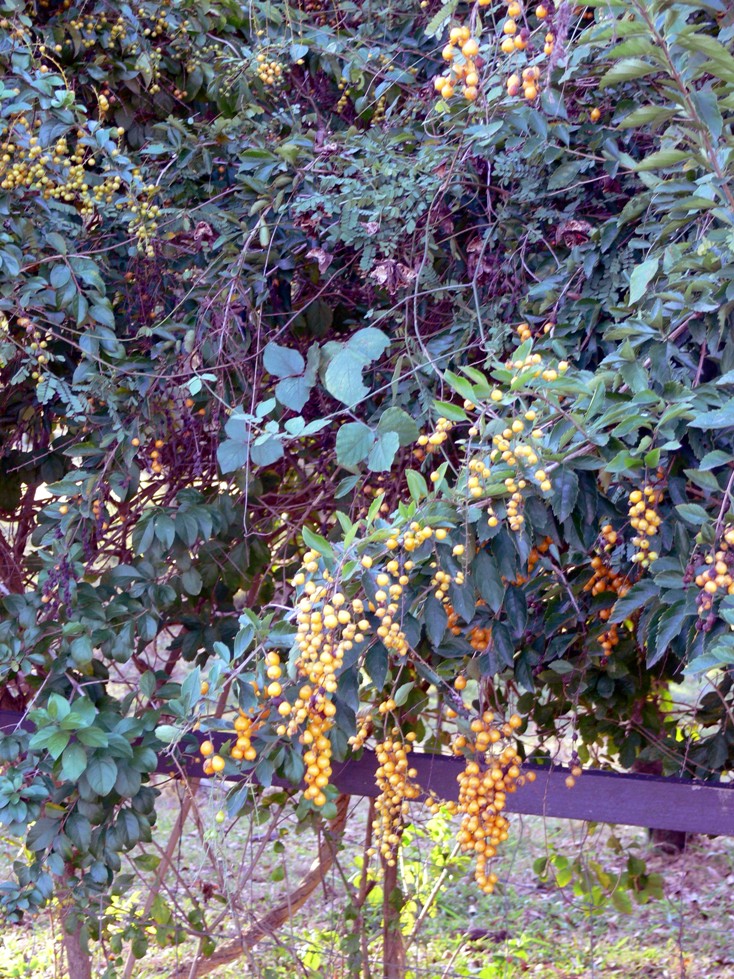
Plants which reproduce via seed pose the greatest weed threat as we cannot control where the masses of seeds end up, especially if they are a food source for birds. Removal of these plants and replacing them with a less problematic one is the best solution. Some plants can have their seed production controlled by pruning. Duranta for example will not produce seed if it is regularly clipped. Keeping your Sheena’s Gold hedge neatly trimmed doesn’t just look good, it helps protect the native environment as well.
Weeds which reproduce through vegetative means predominantly enter bushland through the dumping of garden waste. This irresponsible approach to garden clean-ups can lead to costly outcomes. Disposal of domestic waste at your local tip is a relatively cheap option when compared to the cost to ratepayers of cleaning up weed problems in our bushland, or even receiving a fine for dumping!
Garden weeds on the other hand are those pesky plants which keep coming up between your prized shrubs. Plants by their nature are opportunistic. They see a space and they fill it. In this case, what we define as a weed just happens to be quicker and stronger at seizing these opportunities than other plants. They can then dominate the area. These weeds keep many a home gardener out of mischief for hours on end.
Over the years, many approaches have been taken to control garden weeds. Natural methods and man made chemicals have been promoted. Some have survived the test of time, others have gone out of favour or been banned for safety reasons.
Mulch, cardboard and weedmat have been recommended to blanket the weeds. Electric and petrol-powered steam packs have been developed to “frizzle’ the weeds. Old sump oil has been poured around fence lines and posts to prevent the growth of weeds (and any other living organism). Even fire is used for weed control. The most creative method I saw was in Melbourne a few years ago, during the height of their drought. All the shrubs in the front yard of a house were mulched using 1 metre square sheets of Masonite. Of course this may have been an art installation that I misinterpreted.
All methods work on some weeds though not one method works on all weeds, not even the popular Glyphosate.
The two best ways to control weeds is to prevent the problem in the first place, and if you have a problem, start now! As the saying goes, ‘One year of seeds equals seven years of weeds’. If you put off tackling a weed problem now then you will be creating a greater problem for yourself or somebody else in the future.
Cultivation is the most environmentally sound way for controlling many weeds. Human power is one of the more sustainable resources available for weed control and a little bit of hard work in the garden or bush is good for the body and soul.
Where cultivation fails there are many manual ways to deal with weeds. If the weed reproduces vegetatively it is best not to control by cultivation as the result would be hundreds of plants where you only had one. Complete removal of plant matter is best and it should be disposed of either by fire, in land fill or by rotting in a black plastic bag.
Mulch is a very effective way to control weeds which reproduce by seeds. Whether or not it is placed over cardboard or newspaper, a layer of mulch about 100mm deep will prevent light getting to the seeds and therefore prevent germination. In some cases the seed will rot quite quickly under the layer. Mulch is not effective against most weeds which reproduce vegetatively. These will just grow through the mulch and thank you for helping them to grow better.
Chemical control is not everybody’s choice but it does have its place in the scheme of weed control. By using chemicals wisely, the quantity required and the impacts on the environment are reduced. In conjunction with other methods of control and ensuring that you have a follow up program in place, prevention of weeds re-establishing themselves is possible. To just spray an area believing the weeds to be under control simply creates an environment for weeds to take over again. Also some chemicals will work well on one group of plants and not another. Essentially, if you are unfamiliar with a chemical, avoid using it as you could easily create a bigger problem than you aimed to clear up initially.
There are just about as many weed control regimes as there are weed varieties. For more information about best control methods seek professional advice. Many organisations have a wealth of knowledge and are more than happy to help out. The local council has publications with advice which are available through their offices or at the library. For more detailed advice try a Landcare group, Waterwatch or a local horticulturalist.


About Tohm

Tohm currently heads the team at Amber Leaf Landscaping and is qualified in horticulture, design and construction. His blog is a great place to get some ideas for your landscape, learn about specific plants that thrive in your local environment and see what inspires Tohm as he gets out and about.