
Advice & Tips
Cultivars – When is a native not a native?
There has been a revolution in the garden and many people haven’t noticed it happening. Australian native plants have come into their own in recent years, standing proudly next to classic exotics as desirable elements for the garden.
The concept of the native garden took a hammering in the 1960’s and 1970’s when the selection of plants was generally from seeded and wild varieties. This is fine if the gardener wants a wild looking space around the house but doesn’t sit so well in a lot of suburban areas where the lot sizes are small. Plants were often simply selected because they were native with no thought put into their placement or eventual size. Fortunately, around that time, several farsighted Australians started selecting and hybridising native plants. We can now benefit from their efforts with an ever expanding range of cultivars in our nurseries.
So what is a cultivar? The word means ‘cultivated variety’ and is used to describe a plant which has been selected due to one or more desirable character traits which it displays. These traits may be better flower or foliage colour, form or size which is different to the natural variety or in the case of food plants, a higher yield or better tasting crop. Drought resistance, low maintenance forms and non-invasive varieties are also looked for in good cultivars.
Cultivars can be obtained in different ways. The simplest is recognising a variation of a wild plant, a natural mutation which can be propagated. This method is haphazard and requires the selector to be on the ball at all times.
More control over the results can be obtained through a controlled breeding program. This is done on a variety of scales, from the backyard plant breeder to the large scale nursery “laboratories” where tens of thousands of plants are bred for selection. Careful control of conditions allows for selective pollination within the species or between species, which is known as a hybrid.
A cultivar must display some characteristic which makes it noticeably different from the original species and other cultivars. It needs to be stable, maintaining these characteristics through numerous generations of propagation. New cultivars and their names are registered internationally, which helps to identify the plant and protect the breeder’s rights to profit from their efforts.
Selection of cultivars has been happening for thousands of years with food crops and hundreds of years with ornamental and flowering plants, especially in Europe and America. Australia is now playing catch up and thanks to the efforts of breeds such as Austraflora, Ozbreed, and Aussie Winners many award winning Australian native plants have reached the market place.
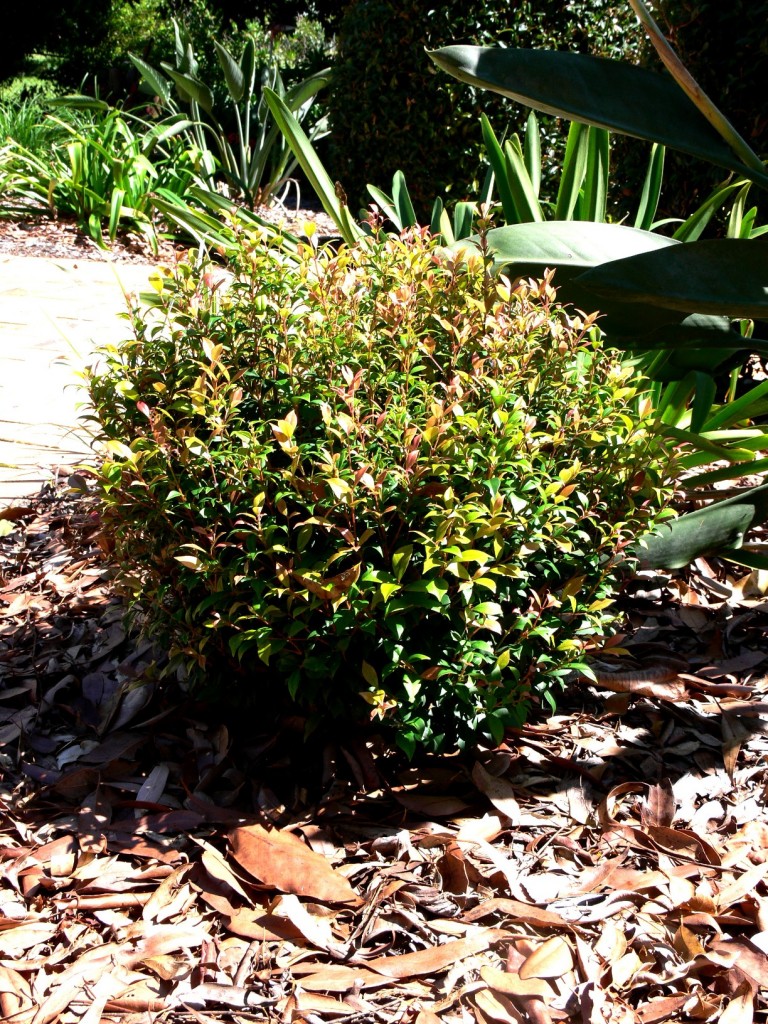
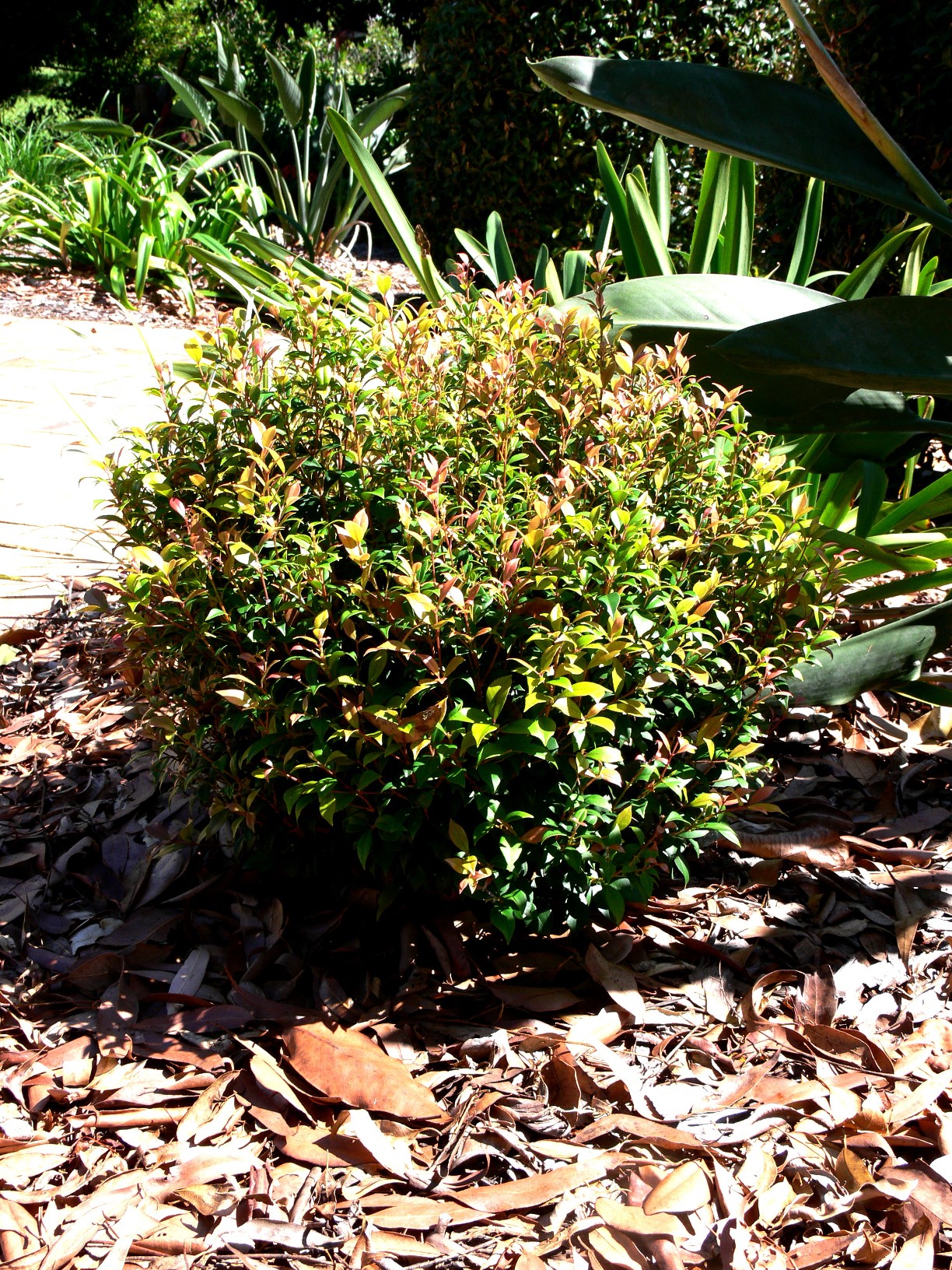
Acmena smithii “Allyn’s Magic” is a great example of how a cultivar can be used where a natural variety may be unsuitable. From seed this plant can grow up to 18 metres tall depending on the conditions. “Allyn’s Magic” only makes it to 75cm, remaining compact and bushy. It is a great native alternative to the Box hedge.
Cultivars should not be used in bush regeneration projects and this is especially so for hybrids which are often sterile.
When selecting plants for your landscape, consider a few cultivars of Australian natives. You will be pleasantly surprised by what is out there.

About Tohm

Tohm currently heads the team at Amber Leaf Landscaping and is qualified in horticulture, design and construction. His blog is a great place to get some ideas for your landscape, learn about specific plants that thrive in your local environment and see what inspires Tohm as he gets out and about.