
Plant Directory
EUPHORBIA
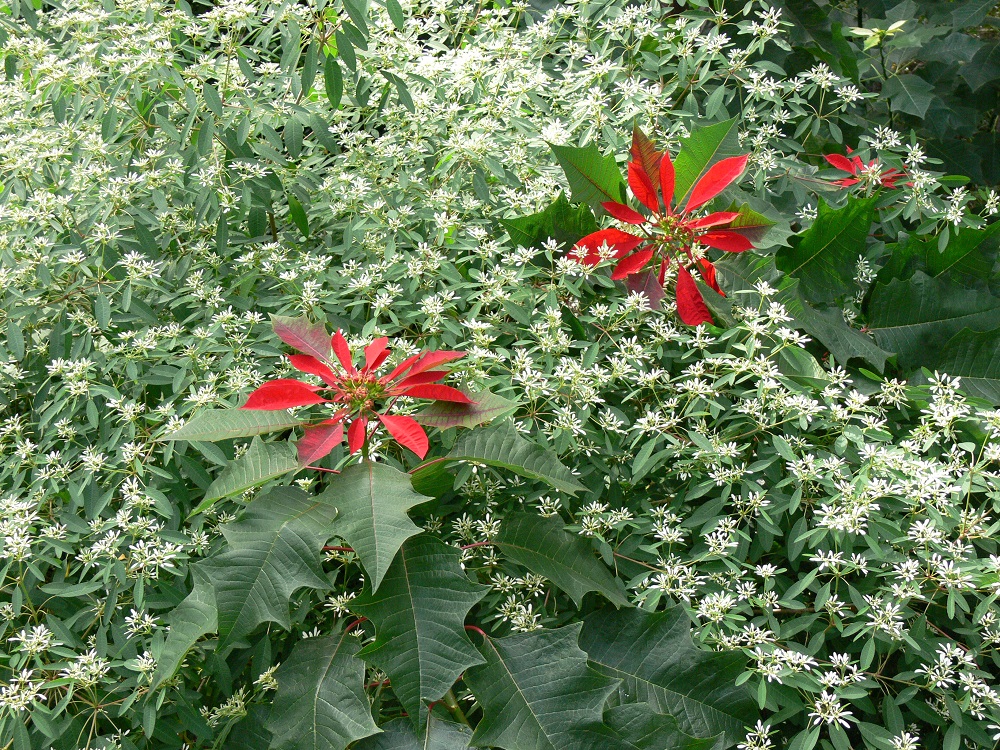
Have you noticed the spectacular red shrubs blooming around the place at the moment? Revered in its native Mexico, the Poinsettia (Euphorbia pulcherrima) is also known as the Christmas Flower. In this part of the world however, we see it flowering in late autumn and early winter.
It is in fact a member of one of the largest genuses in the plant kingdom. There are over 2100 species in the genus Euphorbia ranging from tiny herbaceous plants growing between your pavers through to an amazing array of succulents, and even some very beautiful woody shrubs.
While having many varied forms, all Euphorbias have two things in common. They all produce a corrosive white sap (latex) to deter animals from eating the plant. They also have fairly simple green or yellow flower. The showy displays that many Euphorbias’ are prized for are actually the bracts, a modified leaf.
Most cultivated Euphorbias prefer sunny aspects with the shrubby varieties developing an open leggy habit if grown in too much shade. If a more compact shrub is required, especially with the Poinciana and Snowflake (E leucocephala), prune very low as soon as the coloured bracts start loosing their appeal. Tip prune regularly throughout spring until around the end of January. This will encourage many lateral shoots, each of which will support a flowering head.
Propagation of the shrubby varieties can be done using soft tip cuttings in summer- struck in a glass house at high temperatures of around 25-30 degrees Celsius, or with woody stem cuttings from winter to spring. For the succulent Euphorbias, remove stem sections in spring or summer and leave exposed for a few weeks for the wound to callous, then pot out into a well drained, sandy, striking mix.
The sap can do damage if it comes into contact with mucous membranes and may even cause blindness. Therefore, care should be taken when handling most members of this genus. Immediately wash off any sap that you come into contact with. If the sap has already started to congeal it will no longer be soluble in water. Clean it off with milk or moisturising cream instead. It’s interesting to note that this potent sap has been used medicinally to heal wounds and stomach disorders. A common name for some varieties is Spurge derived from the old French term ‘espurge’, to purge. Do not self medicate with the sap, as poisoning is a possible side effect.


About Tohm

Tohm currently heads the team at Amber Leaf Landscaping and is qualified in horticulture, design and construction. His blog is a great place to get some ideas for your landscape, learn about specific plants that thrive in your local environment and see what inspires Tohm as he gets out and about.