
Plant Directory
Grevillea
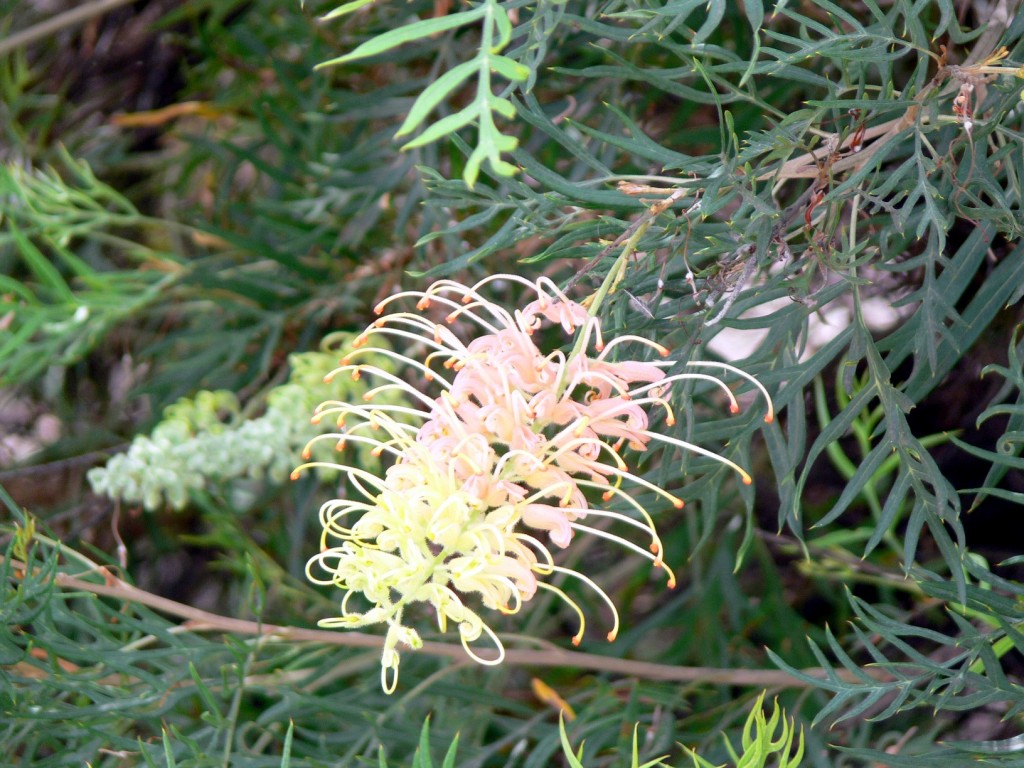
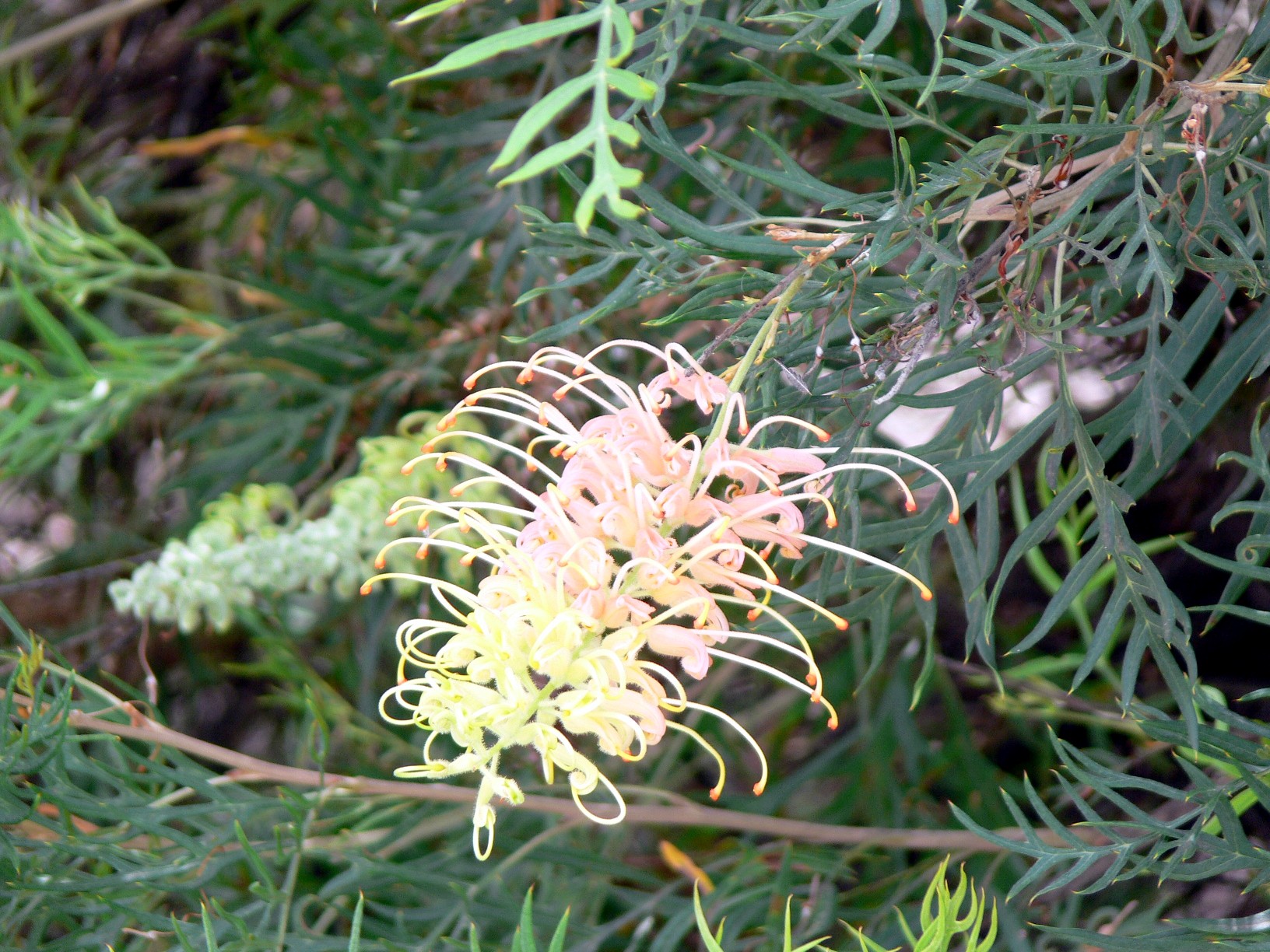
Being in Australia and up to the letter G, how can the plant of interest not be the distinctively Australian Grevillea? Of approximately 360 species, only a handful occurs naturally outside of Australia. Named in honor of Charles Francis Greville, a keen English horticulturalist and close friend of Sir Joseph Banks, its distinctive flower has become synonymous with native Australian gardens.
The Grevillea is a member of the Proteaceae family and therefore has proteoid roots, which is an adaption allowing the plant to grow in soils with scarce water and nutrient supply. As a result of this adaption they are also very sensitive to over fertilization, especially with high phosphorous fertilizers. When planting it as advisable to either use a specialized fertilizer or none at all.
Grevilleas can be found throughout Australia growing in a wide variety of habitats from coastal through to alpine regions, though mostly they prefer sedimentary soils high in silica. The form of Grevillea is also greatly varied; from the prostrate G lanigera ‘Mt Tamboritha’ at 25 cm high to the giant Silky Oak (G. robusta) which can grow to over 35m tall.
Ground cover varieties are popular in this region to cover banks, as some varieties such as G. Royal Mantle and G. Bronze Rambler do not require much maintenance and after a few years will have a spread of up to 5 metres. As well as being sensitive to over-fertilization, Grevilleas don’t take kindly to herbicides being used near them. If you are planning to plant out a bank with these Grevillea, I would suggest you cover the bank with a bio-degradable weed mat or a thick layer of mulch first. This will control the weeds until the plants have formed a solid enough canopy and will also reduce erosion.
Grevillea hybridize readily. As a result many newer varieties are available for the home gardener offering the best of flower and form from their parents. Compact forms such as G. ‘Robyn Gordon’ or G. ‘Molly’ offer great flowering most of the year with a height to only 1-1.5 metres. If you have a bit more room and love to have birds visiting your garden, you cannot go past the G. ‘Honey Gem’. This beauty grows to 4m high with a similar spread and will attract a wide variety of nectar feeders throughout the year. From my breakfast table I am entertained by Honey Eaters, King Parrots, Rosellas, Pale Headed Rosellas and more, thanks to this classic variety.
While Grevilleas are commonly noted for their straggly spreading habit, this doesn’t have to be the case. Many respond happily to a good pruning which will increase the density of the foliage and therefore the number of flowers. Grevilleas predominantly flower at the end of shoots so the more shoots the more flowers. Your biggest decision would be when to prune as the plants seem to flower all year round. For a heavy prune the end of winter is best, while you can trim back about a third of the plant any time of the year. Then, when new shoots are growing back from just below the cuts, take out the next third, and so on. The shape and size can be controlled with minimal interference to flowering.
Finally, if you are working on a revegetation project, plant out local varieties grown from seed rather than selected cultivars as they will have greater resilience to local conditions and will reproduce readily allowing for natural regeneration in the area.


About Tohm

Tohm currently heads the team at Amber Leaf Landscaping and is qualified in horticulture, design and construction. His blog is a great place to get some ideas for your landscape, learn about specific plants that thrive in your local environment and see what inspires Tohm as he gets out and about.