

Plant Directory
Heliconia
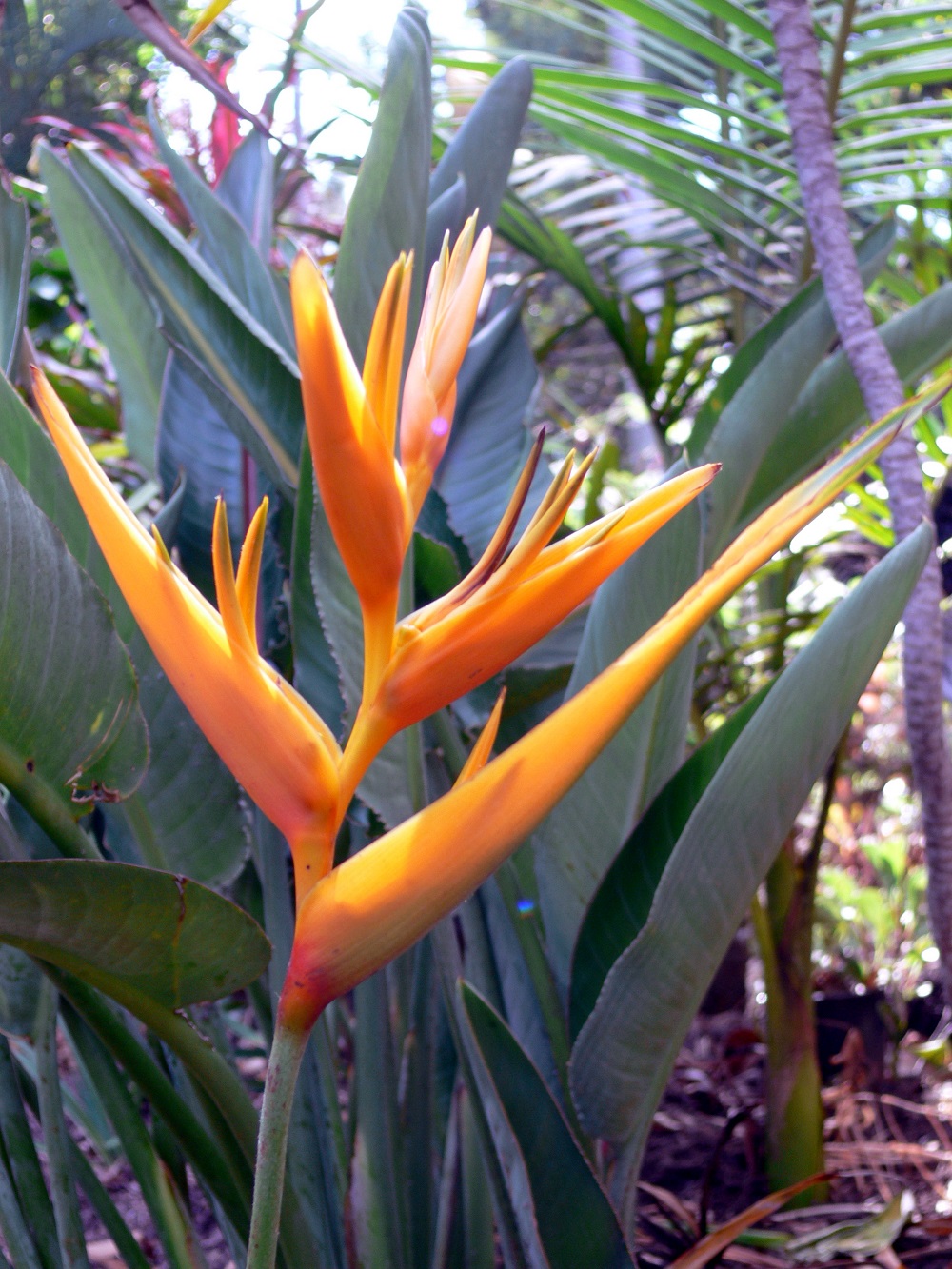
This week we jump from the Grevillea, a plant which epitomises the native garden to the Heliconia, the flagship of exotic plants. Commonly known as Crab Claw or Lobster Claw there are not many flowers as ostentatious as these.
Used by the florist trade throughout the world, many types of Heliconia travel well and last for a long time as cut flowers. They are also a fabulous landscaping plant offering a variety of sizes; from 50cm with the shade loving H. stricta “Dwarf Jamaican” to the 6 metre giants such as Kawauchi. You will need a lot of room for some of them.
Mostly Heliconia prefer full sun with a few exceptions. If you are looking for a good shade lover, try H. angusta “Red Holiday”- it will add a splash of colour to your winter garden.
There are clumping and running Heliconia. The clumpers will spread out slowly, proving themselves more suited to a smaller garden. They will deplete the soil of nutrients rapidly, requiring fertilizing in early spring and mid summer. Cut off the dead flowers and when the new season growth is coming on, cut last year’s shoots right back to the ground. This will leave the clump looking fresh and healthy.
If you prefer a running variety, such as any of the H. psittacorum cultivars, you as the gardener need to consider how you will you control the spread. Large underground pots or root barriers will contain the plant, though after about three years the plant will need to be dug up and a few rhizomes replanted. If on the other hand you prefer to let them run free, they will send flowers up through other small shrubs and can be an attractive way to stabilize banks.
Heliconia grow best in well drained, moist soil with a regular supply of mulch and dug-in compost. I knew of one clump of H. stricta growing well between two Alexander palms for many years until one summer it just upped and died. The reason for this was that the palms and Heliconia were so happy in their place that their roots and rhizomes raised the ground level, hence blocking the flow of water. The Heliconia effectively spent two months in a bog and rotted, proving that too much of a good thing can kill you.
Scale, grasshoppers, mealy bugs and lack of organic matter are the main health issues facing Heliconia. The latter can lead to a general lack of vigour, making the plant more susceptible to attack by the three insects. If the plant is in poor soil and exposed to the sun with inadequate moisture in the soil it will tend to look pallid with mottled or spotted foliage. The plant is most likely to be ready to be lifted and replanted in rejuvenated soil.
Go on a tropical holiday every time you visit your garden by combining Heliconias with Cordylines. You will be the envy of your visitors from down south.

About Tohm

Tohm currently heads the team at Amber Leaf Landscaping and is qualified in horticulture, design and construction. His blog is a great place to get some ideas for your landscape, learn about specific plants that thrive in your local environment and see what inspires Tohm as he gets out and about.